
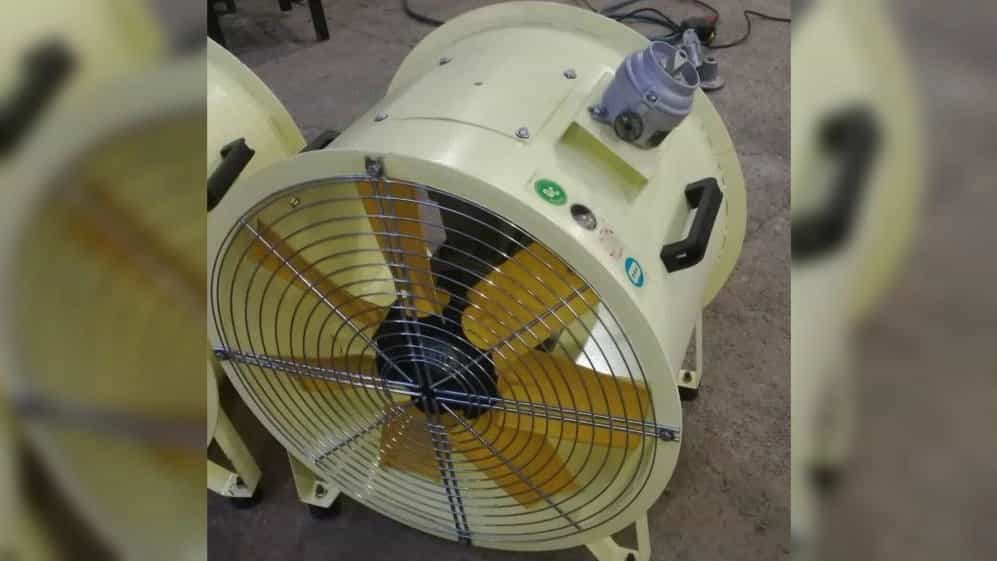
In many industrial units, ventilation is not done only to move air or reduce ambient temperature; Rather, it is part of the process of controlling risk and protecting equipment and employees. In environments where there are gases, flammable vapors or explosive dusts, choosing the wrong fan can be dangerous. For this reason, the sale of industrial fans with anti-spark motor becomes especially important for industries that deal with flammable materials.
The anti-spark industrial fan must be compatible with the actual conditions of the installation location and the type of hazardous material. Simply installing a "spark-proof" motor on any conventional fan does not necessarily make for a safe assembly. Mechanical components, impeller, body, distance between moving parts, surface temperature and the way of connecting equipment should also be selected according to the risk of the environment.
In complexes such as refineries, petrochemical industries, paint factories, chemical warehouses and some food and pharmaceutical industries, the selection of ventilation equipment requires careful consideration. If you need a suitable fan for hazardous environment for your project, you can check the product specifications and contact details on Nasim Fan website or call 09126173497 Take it.
What is an anti-spark industrial fan and what is its use?
Anti-spark industrial fan or fan suitable for explosive environments is a device that is designed and selected considering the risks caused by ignition. This fan is used to work in conditions where there is a possibility of the presence of flammable gas, steam, fog or dust.
In such environments, possible sources of ignition may include:
- Electric spark caused by a defect in the coil or connections
- Excessive increase in the temperature of the engine or the surface of the parts
- Contacting moving parts with each other due to failure or improper adjustment
- Creating a mechanical spark due to the collision of the propeller with the body
- Accumulation of static electricity in some operating conditions
The anti-spark fan is selected according to the type of danger, protection method, material of components and working conditions to reduce the possibility of creating a source of ignition. Of course, the term "anti-explosion" does not mean absolute immunity from any accident; Rather, it refers to the level and type of protection defined for the specific equipment and environment.
When considering the sales proposals of industrial fans with anti-spark motor, it is necessary to check the type of protection and the scope of use of the equipment from the license plate, certificates and technical documentation; Don't limit yourself to the name of the product or the short description of the seller.
The difference between a normal fan and a fan with an anti-spark motor
A conventional fan may be quite suitable for general ventilation, hot air discharge or clean air transfer; But in an environment where there is a possibility of an explosive atmosphere, choosing it without risk assessment can be inappropriate.
The most important differences are:
1. Motor type and electrical protection: The motor must be designed and approved for the specified hazard range. The type of protection, the group of flammable material and the permissible temperature of the engine surface are important selection factors.
2. Mechanical design: In fans suitable for dangerous environments, the possibility of the impeller hitting the body, changing the distance between the parts, and creating a mechanical spark should be considered.
3. Operating temperature: Even if there is no electrical spark, an increase in the surface temperature of the engine or other components may be dangerous for some flammable materials.
4. Documents and markings: Appropriate equipment must have verifiable specifications; including the type of protection, scope of use and information related to the claimed certificate or standard.
Therefore, when buying an anti-explosion fan, you should not compare only the motor power or the amount of ventilation. The fan should be checked for both ventilation performance and compatibility with the hazardous environment.
In what industries are anti-spark industrial fans used?
The use of industrial fans with anti-spark motor is not limited to environments where there is a permanent risk of explosion. In some processes, the hazard arises only under certain conditions or when material leaks; For this reason, classification of the environment and risk assessment must be done before choosing the equipment.
Oil, gas and petrochemical industries
There is a possibility of the presence of flammable gases and vapors in parts of refineries and petrochemical units. Ventilation can be used to exhaust contaminated air, control fumes, or help manage environmental conditions. The selection of the fan should be in harmony with the classification of the region and the type of process material.
Paint and coating factories
In some painting lines, solvent vapors may accumulate in the air. The fan used in this section must be compatible with the process conditions and the risk of chemicals. It is also important to pay attention to the chemical resistance of the components, the working temperature and the location of the engine.
Chemical and pharmaceutical industries
In units where flammable materials or solvents are used, it is not enough to select a fan based on the volume of air required. Environmental conditions, the possibility of leakage, the type of material and cleaning or process needs should be included in the purchase specifications.
Grain and powder industries
In some processes of grinding, transferring or moving powder materials, flammable dust can cause danger. The type of risk in these environments is not the same as the risk caused by gases; Therefore, the equipment should be selected based on the classification related to the dust.
In all these applications, it is important to check the project conditions before ordering. For guidance on choosing a suitable fan for your work environment, you can visit Nasim Fan.
Important standards in choosing an anti-spark fan
Related standards and certifications provide a framework for evaluating equipment used in potentially explosive atmospheres. However, having the name of a standard on the product alone is not enough; It should be checked that the mentioned standard covers exactly what equipment and whether it is compatible with the project conditions or not.
ATEX standard
The European Union ATEX Directive covers equipment and protective systems used in potentially explosive atmospheres. This framework is related to safety requirements and conformity assessment of equipment. According to the description of the European Commission, an explosive environment may be created by the combination of air with flammable gas, vapor, mist or dust. ATEX official information
IECEx certificate
IECEx is an international system for evaluating and certifying equipment used in explosive environments. The manuals of this system deal with the processes and requirements related to equipment certification. Official IECEx Guides
Design standard of fans used in explosive atmosphere
Standard EN 14986 deals with the design requirements of fans that are made to work in potentially explosive atmospheres. This standard covers things like design, manufacture, testing and marking of fan assembly. Its application details should be adapted to the valid version of the standard and project specifications. EN 14986 introduction reference
When inquiring about the sale of industrial fans with anti-spark motor, ask the seller to provide technical documents related to the same model. Engine certificates and fan assembly certificates may cover different topics; Therefore, they should not be assumed to be the same.
How to choose the right anti-spark industrial fan?
Fan selection should start from the environment and process requirements. In the following, we review the most important decision-making factors.
1. Determine the classification of the hazardous environment
The first step is to determine the type and range of risk at the installation site. In common classifications, Zone 0, Zone 1, and Zone 2 are used for gases and vapors, and Zone 20, Zone 21, and Zone 22 are used for flammable dusts.
This classification should be done based on risk assessment and site documentation. A salesperson should not guess the danger zone just by hearing the name of the industry or material. Information related to the flammable substance, the possibility of its presence and the process conditions must be available.
2. Check the type of flammable substance
The characteristics of the dangerous substance affect the choice of equipment. The type of gas or vapor, substance group, ignition temperature, and the presence of dust are among the things that must be checked.
For example, a fan suitable for a solvent vapor environment may not be suitable for an environment with flammable dust. For this reason, the general term "anti-explosion fan" is not enough for a technical order.
3. Calculate the required air flow and pressure
The fan must be able to move the required air volume against the resistance of the system. Air flow rate is usually expressed in units of cubic meters per hour or cubic meters per second, and static pressure is determined based on the resistance of channels, filters, dampers and other components.
Choosing a fan with high flow rate but insufficient pressure may cause the expected air not to be transferred in the channel network. On the other hand, choosing a very large fan can increase the initial cost and energy consumption.
4. Choose the type of fan according to the application
Axial and centrifugal fans are common options in industrial ventilation systems.
- Axial fan: In applications where moving a large volume of air with relatively low resistance is considered, it can be a good option.
- Centrifugal fan: It is considered in many systems where the resistance of the channel or peripheral equipment is higher.
- Special process fans: In special conditions, there may be a need for a special design in terms of material, temperature, pressure or type of fluid. be.
The type of fan should be selected based on the performance curve and the actual characteristics of the system. Simply choosing based on propeller diameter or engine power is not an accurate decision.
5. Consider ambient temperature and surface temperature
The temperature of the installation environment and the allowed surface temperature of the equipment are important in choosing the motor and fan. In hot, enclosed or limited ventilation environments, actual conditions may differ from normal design conditions.
Also, the allowable temperature of the surface must be compatible with the characteristic of the flammable material. This issue is especially important in environments where there is a risk of gas, steam or dust.
6. Check the installation and maintenance conditions
Installation space, direction of air flow, access for service, condition of channels and the possibility of periodic inspection should be checked from the beginning. Improper installation can cause vibration, change the distance of parts or unwanted pressure on the body.
In equipment that has a protection certificate, repairing or changing parts without following the manufacturer's instructions can affect the level of protection. The manufacturer's manual should be the basis for installation, service and repair.
What factors affect the price of an anti-spark industrial fan?
The price of the industrial anti-spark fan depends on the technical specifications and order conditions, and a fixed price cannot be considered for all projects. The important factors are:
- Fan type and propeller structure
- Air flow rate and required pressure
- Power, rpm and motor specifications
- Type of protection and required documents
- Body material and parts in contact with air flow
- Environmental temperature and process conditions
- Accessories such as shock absorbers, dampers or connections
- Dimensions, installation method and need for custom design
When comparing prices, it is better to compare the technical specifications of the offers. A product with a lower price may not be comparable to another option in terms of flow rate, pressure, type of protection or documents required by the project.
To receive an offer tailored to your needs, prepare the project specifications and inquire through Nasim Fan website or contact 09126173497.
Tips that you should not ignore before buying an anti-spark fan
Before finalizing the order, a few tips can avoid wrong choice and subsequent costs:
Write down the specifications. Material type, area classification, flow rate, pressure, ambient temperature, voltage and installation conditions must be recorded in the purchase request.
Check the documents. The title of spark-proof or explosion-proof is not enough on its own. The license plate specifications, certificates and manufacturer's instructions must be adapted to the proposed model.
Evaluate the motor and fan assembly separately. The suitability of the motor for the hazardous environment alone does not cover all the mechanical and process risks of the fan assembly.
Pay attention to the installation and commissioning. Even the proper equipment may not perform safely and optimally in case of improper installation.
Put maintenance into the schedule. Periodic inspection, vibration control, checking the condition of the bearings and following the repair instructions are effective in maintaining the performance of the fan. Any repair or modification must be in accordance with the requirements of the manufacturer and protection of the equipment.
Why visit Nasim Fan to sell industrial fans with anti-spark motor?
Choosing an industrial fan for sensitive environments requires careful consideration of project needs and coordination between technical specifications and operating conditions. The purpose of buying is not only to get a device; Rather, a device should be selected that is compatible with the system in terms of performance, dimensions, power, environmental conditions and protection requirements.
In the way of choosing a fan, paying attention to the following can make the purchase process more accurate:
- Determining the real need of the ventilation system
- Comparing the technical specifications of the proposed models
- Checking the engine type and protection documents
- Paying attention to the installation and maintenance conditions
- Receiving the necessary information before placing the order
To check the available options and get more information about industrial fans, visit Nasim Fan website. Also, for project requirements and inquiries, contact 09126173497.
Frequently asked questions about non-sparking industrial fans
What is the difference between an anti-spark industrial fan and a normal fan?
The anti-spark industrial fan is designed or selected for use in environments where there is a possibility of flammable gas, vapor or dust. The type of protection, surface temperature, mechanical design and technical documents must be compatible with the classification of the environment. A normal fan is not necessarily suitable for such conditions.
Is it enough to install an anti-spark motor on a regular fan?
No. The engine is only one of the components of the set. Impeller design, spacing of moving parts, housing, possibility of mechanical impact, temperature conditions and requirements for the entire fan assembly should also be reviewed. The suitability of the equipment must be confirmed with technical documentation and actual conditions of use.
What specifications should we provide when buying an anti-explosion fan?
It is better to specify the type of flammable material, classification of the area, air flow rate, static pressure, ambient temperature, installation conditions, type of electricity and process requirements. The more complete the project information, the more detailed the options will be reviewed and the technical proposal will be made.
Summary and action guide
Sales of industrial fans with anti-spark motor leads to a suitable choice when the fan specifications are in harmony with the actual conditions of the environment and the needs of the ventilation system. Knowing the type of risk, checking the standards and documents, determining the flow rate and pressure, paying attention to the working temperature and evaluating the fan set are the most important stages of the purchase.
In explosion-prone environments, you should not be satisfied only with the engine power or the advertising title of the product. The choice should be made based on technical information that can be checked and risk assessment so that the equipment is suitable for the intended application.
If you need a fan suitable for hazardous environments for your industrial project, visit Nasim Fan website right now and call 09126173497 call. Providing the characteristics of the environment and the ventilation system makes the selection process faster and more accurate.